


America turned 250 this weekend. It also married off its most famous couple. Both were declared historic before they happened.
Updated: Aug 3
I want to walk you through something, because I don't think the rest of the world quite caught what just happened here, and honestly, neither did most of the people it happened to.
I should say where I'm standing, because it matters here. I spent my early years watching this country from the outside, and most of my adult life living inside it. This leaves me in an odd position: too far in to still be a tourist, too far out to fully buy the show. From a distance, American confidence used to feel like a flaw. It was a country that announced things were great before checking. Up close, I came to another theory: it's not confidence, it's entertainment. It might be the best in the world at this. I still don't know how seriously I'm supposed to take any of it. I still don't.
This weekend, the United States is turning 250 years old. Not turned. Turning. As of this writing, on the actual Fourth evening, the country still has a few hours of programming left before anyone can call this thing finished. Two hundred and fifty. It’s been a quarter of a millennium since men in wool coats decided the King of England was being a bit much. They wrote a strongly worded letter about it. By any measure, this is a big anniversary. The kind that deserves a party. So, naturally, the country planned two of them. People argued about which one was real. In an unrelated but perfectly timed coincidence, a pop star also got married three miles away.
Let's take these one at a time, because the layering here is the whole point.
First: America couldn’t even RSVP to its own birthday. On one side, America 250, a commission planned with the risk tolerance of a church bake sale, quietly operated under the fantasy that no one in power would notice. Enter Freedom 250—a fever dream of merch tables and ‘rebranding’ by an administration convinced ‘America’ needed a wardrobe change. Two committees, two logos, one country, zero chance of coordination. Cue the parade of dueling party planners.
Freedom 250 promised the largest fireworks in the known universe—a suspense-free spoiler, since they proclaimed victory before a fuse was lit. This is America’s specialist subject: labeling things ‘historic’ then praying the facts can keep up. Optimism? No, just a press release with pyrotechnics.
Then there's the reflecting pool. The one at the base of the Lincoln Memorial, which someone decided needed a fourteen-million-dollar renovation ahead of the big weekend, was repainted a deep patriotic blue. Within weeks, the paint started peeling off in sheets. Officials blamed vandals. I don't know which vandals these were, but they apparently have very specific and widespread opinions about marine-grade epoxy. When asked whether anyone was tracking the environmental impact of setting off the largest fireworks display in recorded history, a few hundred feet from a peeling, algae-adjacent pool, an EPA spokesperson offered the kind of answer that should be bronzed and installed in a museum: fireworks, she said, "are awesome." That's the whole quote. That's the full extent of federal oversight on the matter.
Nothing at this party was actually load-bearing. It was set dressing, all the way down to the parts that were supposed to hold weight.
And then, mid-week, the stage itself started shedding parts. During a rehearsal for the fair's Independence Day finale, a large section of overhead structure worked loose and crashed down onto the stage, missing a group of young dancers by what looked, in the video, like a few unlucky feet. The performers scattered. The music stopped. Freedom 250's official response was reassuring and, in the same breath, unintentionally poetic, confirming that everyone was safe and noting that the collapsed piece belonged to "the backside of the stage." As if the backside of a quarter-billion-dollar production for the world's oldest surviving democracy were somehow allowed to be structurally optional. Around the same fairgrounds, a ceremonial arch built for the same celebration had already begun to separate at its seams, revealing what looked a lot like ordinary construction foam beneath the ornamental columns. Nothing at this party, it turned out, was actually load-bearing. It was set dressing, all the way down to the parts that were supposed to hold weight.
Days earlier, the president, poised atop Mount Rushmore, warned the nation about an ideological threat last seen at disco parties in the early Sixties. All this surrounded by icons literally carved to commemorate men who faced—and survived—actual existential threats. And tonight, he’s set to deliver an address only slightly shorter than the nation’s entire history, braving oven-like heat to demonstrate true leadership, apparently defined as mere human roasting.
That's the state of the nation's birthday party: two competing hosts, a peeling pool, a faltering stage, and a headline act about to sweat through a speech—all hours before the fireworks.
And then, the night before all of it, at Madison Square Garden, Taylor Swift got married.
I want to be careful here, because this is a wedding, and weddings are personal, and I have no notes on the vows. But I do have notes on the infrastructure. Streets are closed for two days. A security operation to match a head-of-state visit. A charity donation large enough to be its own press release. And, humming underneath all of it, the same word Freedom 250 kept reaching for: historic. Declared, again, ahead of time. Before a single vow was exchanged, this was already being covered as the wedding of the century, in the same week as the party of the century, in the same eight square miles of Manhattan and Washington. Here's what I think an outside observer is supposed to take from all this, watching from anywhere that isn't here: America didn't actually celebrate two distinct things this weekend; it used the same routine for both. On one hand, there's the quarter-millennium of self-governance; on the other, a tight end getting married. The contrast in occasion disappears. The playbook remains: announce it's historic, let the facts follow later if ever, close the streets, promise something for the record book, and never worry about the paint job.r.
Post-fireworks, because nothing says reflection like the faint smell of gunpowder and hot dogs still lingering in the air. Back in New York, where the wedding had already happened the night before, the city held its own fireworks, and I watched this one live. By the time the display actually launched over the East River, a severe thunderstorm watch had settled over the five boroughs on top of one of the hottest Fourth of Julys on record, and organizers moved the start up from 9:25 to 9:02, racing the weather instead of waiting for the hour they'd spent weeks promoting. The twenty-seven-minute score, composed by Jason Howland and sung live by The Voice's Alexia Jayy, worked its way through fifty
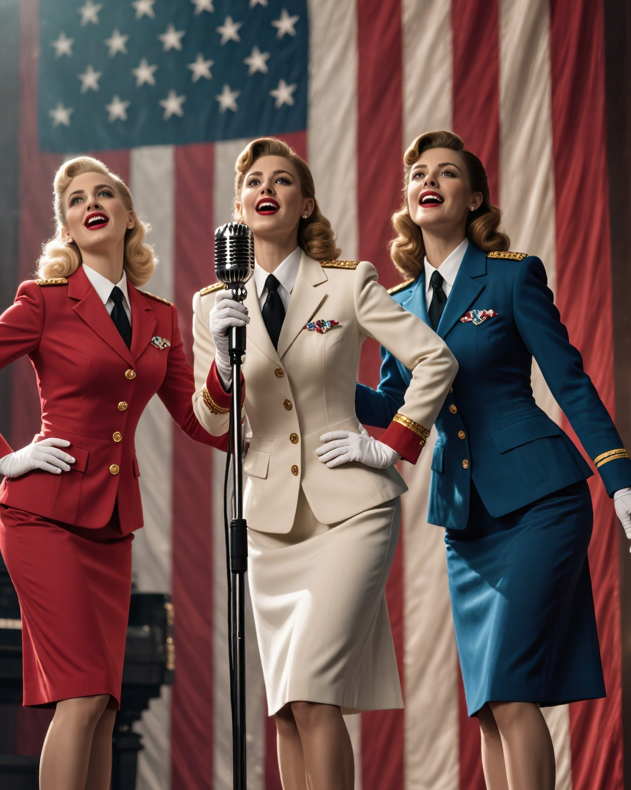
years of American summer classics, and at some point, watching it myself, I heard Springsteen’s "Born in the USA," which NBC's own press materials described only as "the patriotic classic." It is not a patriotic song. It's about a man sent to fight a war his country asked of him and left him with nothing when he came home, and it has been played at rallies from every direction by people who know the chorus and have never once sat with the verses. The current president knows this history better than most. His own rallies booed this exact song back in 2016 after “The Boss” publicly objected to its use, and as recently as this spring, he was calling the man who wrote it a "total loser" on social media and urging supporters to boycott his concerts. The two of them have been fighting about this song, on and off, for the better part of a decade. None of that stopped it from playing tonight anyway, over a barge on the East River, introduced as a patriotic classic, to a crowd that mostly just likes the chorus. If a single needle-drop could close out a weekend built on calling things historic before anyone checked what they meant, that's the one. Even the soundtrack didn't do its own reading.
Two hundred and fifty years in, and what America may have perfected is not independence, but the art of the press release, a striking contrast to its founding ideals.
If satire were currency, this article would pay off the national debt. Declaring everything historic before it even happens? Hooray, America’s true pastime exposed, confetti cannon and all. Now, if you’ll excuse me, I need to press release this review before history gets ahead of me.


Comments